
 IND:
 UK:
 US:
 AUS:


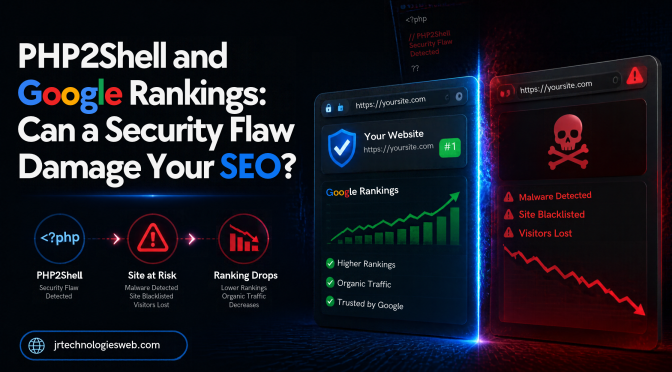
Your website could be losing search visibility because of a problem you cannot see. A security vulnerability may seem like a technical issue, but when attackers exploit it, the consequences can extend to your Google rankings, organic traffic and visitor trust.
PHP2Shell raises an important question for website owners: can a PHP security flaw damage SEO performance? The answer is yes, indirectly. If an attacker compromises a website, injects spam or causes prolonged downtime, search visibility can suffer. However, simply running vulnerable software does not automatically trigger a Google ranking penalty.
Understanding how PHP2Shell works, which websites may be at risk and what steps can reduce the damage is essential for protecting your website’s security and long-term search performance.
What Is PHP2Shell? A Quick Definition
PHP2Shell is the name given to two critical vulnerabilities in the PHP programming language, disclosed on 21 October 2026. Tracked as CVE-2026-109618 and CVE-2026-109619, these flaws can potentially allow attackers to execute malicious code on vulnerable servers without authentication.
PHP powers many websites, including content management systems and web applications. When the underlying PHP environment is vulnerable, the consequences can extend beyond technical problems to website availability, visitor trust and search performance.
How Can PHP2Shell Affect Google Rankings?
Google aims to direct users towards helpful, accessible and safe web experiences. A compromised website can undermine these expectations in several ways.
- Malicious content: Attackers may inject spam pages, hidden links or deceptive content that damages a website’s reputation.
- Security warnings: If Google detects certain threats, browsers or search results may display warnings that discourage visitors from proceeding.
- Website downtime: Server crashes or emergency shutdowns can prevent Googlebot from crawling pages. Prolonged inaccessibility may affect indexing and rankings.
- Reduced user confidence: Visitors who encounter warnings or suspicious redirects may leave, reducing the chance of meaningful engagement and conversions.
Google’s documented security policies distinguish hacked content and malware-related issues from ordinary ranking factors. The precise impact depends on what happened, how long it lasted and how effectively the issue was resolved.
What Makes the PHP2Shell Vulnerability So Serious?
The main concern is that these flaws affect PHP’s runtime environment rather than relying solely on a weakness in a particular website plugin.
Security advisories describe potential remote code execution, sensitive memory exposure and service disruption. A successful attack could therefore provide opportunities to tamper with website files, access sensitive information or disrupt normal operations.
For website owners, this creates a wider risk than a temporary technical error. A compromised site could continue appearing in search results while presenting unsafe content to visitors.
The important question is not simply whether your website uses PHP. It is whether the actual PHP installation is affected, whether the appropriate security updates have been applied and whether any compromise has occurred.
How to Protect Your Website and SEO Performance
You do not need to panic, but you should take this vulnerability seriously. A practical response starts with identifying exposure and fixing the underlying security issue.
- Check your PHP version: Ask your hosting provider or administrator to identify the PHP runtime used by every internet-facing application.
- Install the appropriate security update: The PHP security team lists fixed releases as PHP 8.5.12, 8.4.27, 8.3.36 and 8.2.35. Older branches require verified vendor fixes or an upgrade to a supported version.
- Investigate signs of compromise: Review server logs, unexpected file changes, suspicious redirects and unfamiliar pages.
- Check Google Search Console: Review security issues, indexing reports and unusual changes in search performance.
- Verify the recovery: After remediation, confirm the website works correctly, remove malicious content and request a review if Google has flagged a security issue.
Remember that installing a patch fixes the vulnerability but does not necessarily remove malicious files already present on a compromised server.
Final Thoughts: Website Security Is Part of Sustainable SEO
PHP2Shell highlights an important connection between website security and organic search performance. A vulnerability does not automatically damage rankings, but an exploited flaw can create the conditions for traffic loss, indexing problems and reduced visitor confidence.
The best response is straightforward: identify affected systems, apply verified security updates, investigate possible compromise and monitor search performance during recovery.
A secure website gives your SEO strategy a stronger foundation. Protecting that foundation helps preserve accessibility, credibility and the quality of the experience visitors receive.
Frequently Asked Questions (FAQs)
1. Can PHP2Shell directly lower Google rankings?
Not automatically. Rankings may suffer if exploitation results in hacked content, malware warnings, persistent downtime or other problems affecting Google’s ability to access and trust the website.
2. Does every PHP website have the PHP2Shell vulnerability?
Not necessarily in its current state. Exposure depends on the deployed PHP version, available security patches and the environment in which the website runs.
3. Which PHP versions are affected by PHP2Shell?
The disclosed flaws affect multiple PHP branches, including versions before the patched 8.5.12, 8.4.27, 8.3.36 and 8.2.35 releases. PHP 8.1 and older branches need particular attention because upstream support has ended for those versions.
4. Can PHP2Shell cause a Google security warning?
Potentially, yes. If an attacker uses a compromised website to distribute malware or engage in phishing, Google may display security warnings or take other protective measures.
5. How can I tell if my website has been compromised?
Look for unfamiliar pages, unexpected redirects, suspicious files, unusual server activity and security alerts. A clean-looking homepage does not guarantee that the underlying server is safe.
6. Will updating PHP restore lost rankings?
Updating can remove the underlying vulnerability when the correct fix is applied. Rankings may recover after the website is secured and Google’s systems recrawl it, but recovery is not guaranteed and can take time.
7. Can a hacked website lose its Google indexing?
Yes. Google may remove affected URLs or restrict visibility when it identifies serious security problems. The extent of any removal depends on the nature and severity of the issue.
8. Does HTTPS protect my website against PHP2Shell?
No. HTTPS encrypts data exchanged between visitors and a website, but it does not fix vulnerable PHP code. A website can use HTTPS and still be compromised through a server-side vulnerability.
9. What should I do if Google Search Console reports a security issue?
Investigate the affected URLs, secure the server, remove malicious content and verify the fix. Once the issue is resolved, follow Google’s instructions to request a security review where applicable.
10. How often should I check website security and SEO performance?
Monitor security alerts, software updates, server logs and Google Search Console regularly. Combining these checks helps identify technical threats before they cause more extensive disruption.
 Reviews

